Applied AI programs ready for the manufacturing floor
10+
Equipment interfaces (IF) connected on site
1,500+
Only the features you truly need, exactly where you need them. That is Wavegram's philosophy of system design. We build everything in-house, from equipment connectivity to AI and UI/UX, and own it from deployment to operation.
ECHO AIWaveWorksLINKERLinkerFlowWaveDeskWaveCloud
RxControlsERPMESCRMTEAMSAnalyzeCatalog
ECHO AI
Hand repetitive work to ECHO AI
Agents finish the work of finding data, organizing it, and writing reports. Models learn from production · equipment data to predict what comes next.
For routine work like daily morning output reports, weekly inventory checks, and supplier delivery replies, just set a schedule and ECHO handles it. People simply review and approve.
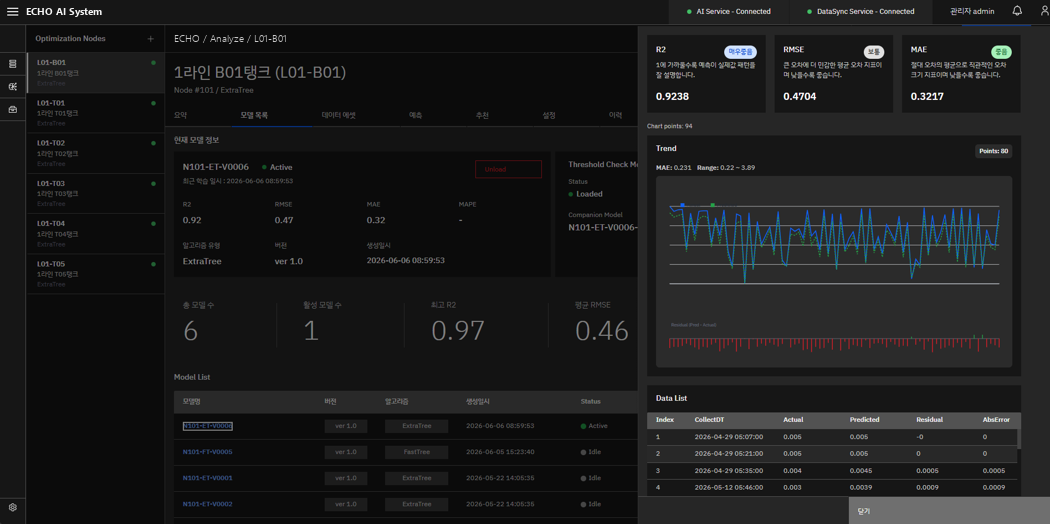
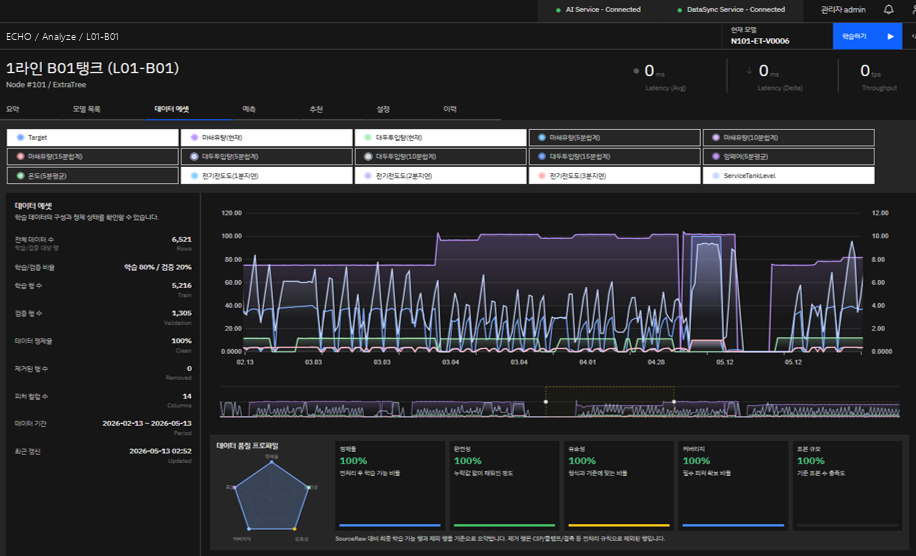
Select equipment and process data to train prediction models, then overlay actual and predicted values to see how well they fit. Models that fit well go straight into recipe control and predictive maintenance.
From data selection to model training on one screen
Check accuracy with actual vs. predicted trends
Apply validated models straight to AI on the floor
Before it's too late, transform your process with Wavegram.
Food manufacturing · beverages
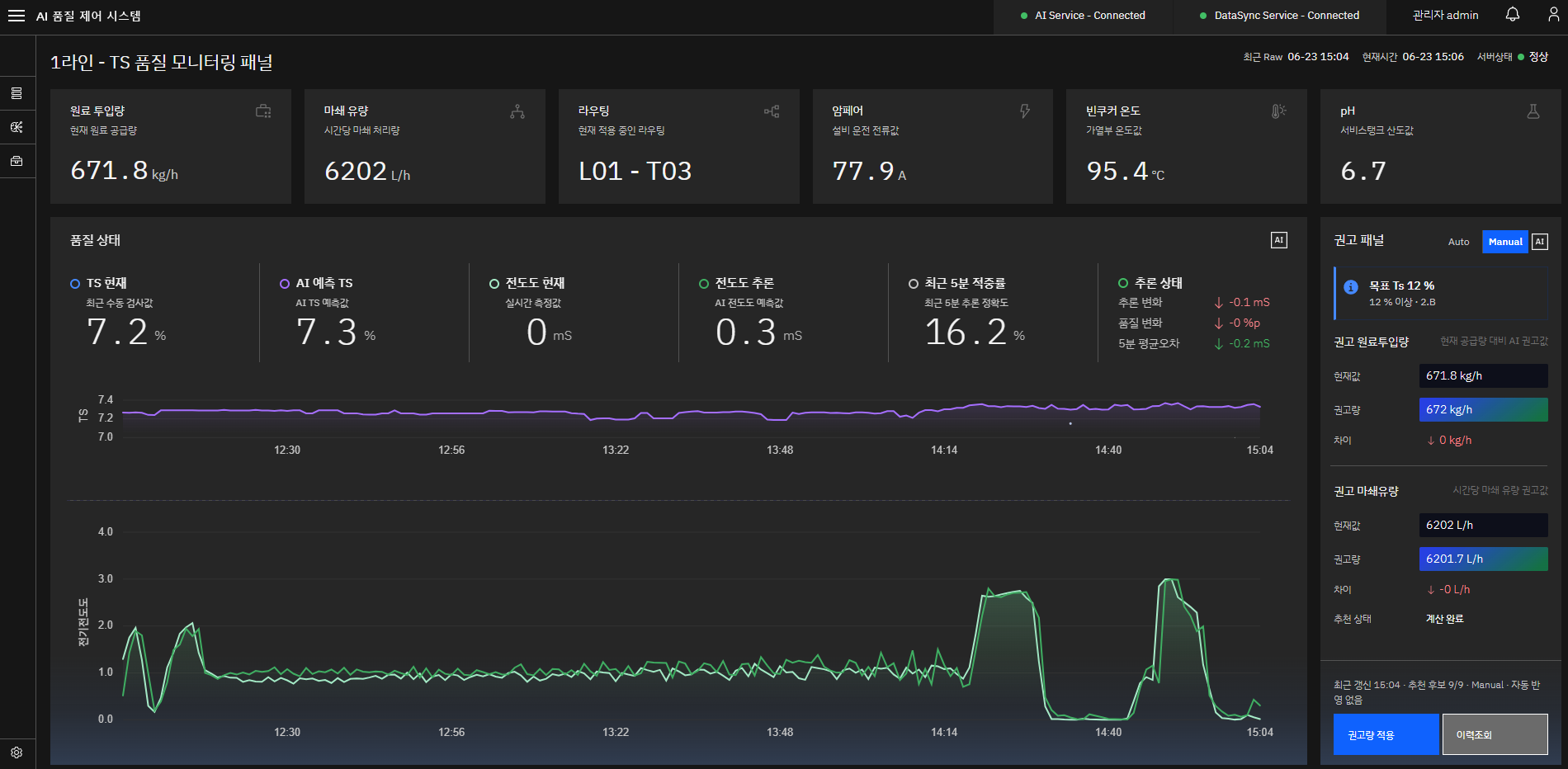
AI retunes the recipe for every batch
Projects
Even with the same recipe, raw material varied from batch to batch, so quality metrics in the final tank fluctuated. Feed corrections relied on the intuition of skilled operators.
Method
Raw-material feed counter, set and actual feed rate, water flow, heater temperature, and downstream load signals were aligned at 1-minute intervals and joined with work order, tank, and item data. Instead of one model per line, models are trained separately per line, tank, and item, and multiple AI models are compared on the same criteria; only passing models are used. Enter a target quality and it calculates 3 candidate feed and operating conditions.
What changed
The next batch's feed correction appears as a recommendation on the operator's screen. It starts as advice and moves to automatic application within validated ranges.
Analyze · LINKER
Food manufacturing · beverages
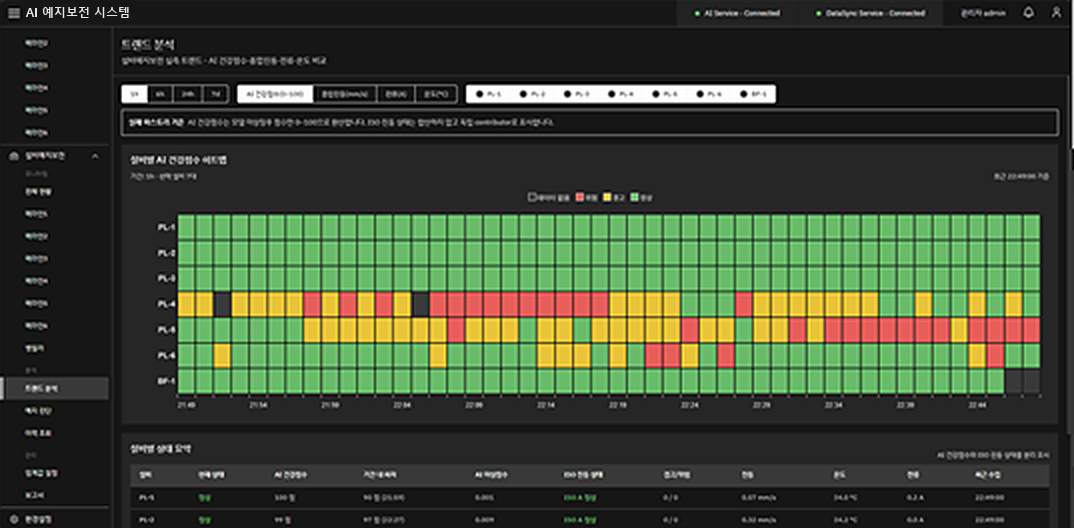
Alerts you before equipment stops
Projects
When key equipment stopped without warning, production plans and quality collapsed together. Maintenance began only after a failure.
Method
Vibration, current, and temperature sensors are connected and monitored in two layers. Upper and lower limits per sensor, set from normal-operation data, catch obvious risks instantly, while AI learns normal patterns to catch signs that drift slowly over time. Warning and danger thresholds are separated, and false positives and misses are tuned on site.
What changed
Shift from repair-after-failure to maintenance planned on early signs. Dashboards and alerts put maintenance staff a step ahead.
Analyze · LINKER · LinkerFlow
Food manufacturing · packing
Reads product type and expiry print in one pass
Projects
Rule-based readers missed smeared or distorted print, and inspection conditions had to be reset with every product change.
Method
A classification model identifies packaged product types, and AI character recognition reads expiry dates. New products are added by retraining with images, not by changing conditions.
What changed
The same camera catches mix-ups and print defects together. No line stop for product changeovers.
AI VISION
Products
Pick only the products you need and get started
From AI to business systems, equipment data, and remote support. Start with one and grow on the same account.